
By Christoph Fluke | Inner Vision Artworks
I don’t want anger to have the last word in the way we treat each other. That doesn’t mean pretending everything is fine. Some things deserve a firm response. But I want to notice the moment when standing up for something turns into trying to tear somebody down.
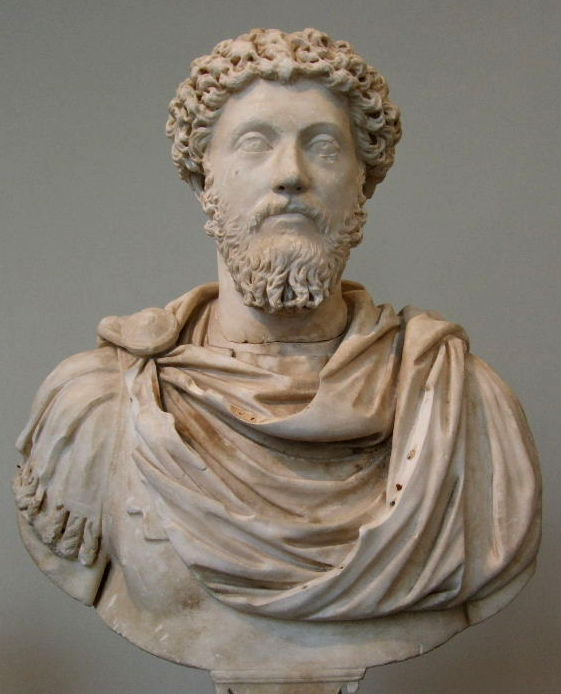
Marcus Aurelius gives me something to think about here. His Meditations offers an ancient Stoic perspective on our judgments, our conduct, and our responsibilities to other people. I read these passages as invitations to examine myself, not as permission to judge everyone else.
Notice what anger adds
“Eighth, consider how much more pain is brought on us by the anger and vexation caused by such acts than by the acts themselves, at which we are angry and vexed.”
— Marcus Aurelius, Meditations, XI.18, translated by George Long
This is part of a longer reflection on dealing with people who offend us. Marcus asks himself to consider his own faults, the limits of his understanding, and the possibility of responding with genuine goodwill.
I don’t take this sentence as a measurement of suffering. Some injuries are devastating, and a person’s anger does not make that harm their fault. This is philosophy, not a scientific rule about every person or every injury.
What I take from it is a question: What am I adding to this moment?
Am I addressing what happened, or rehearsing an insult until it fills the whole day? Am I protecting something important, or looking for somebody to hurt back? I may not get to choose the first feeling. I can work on the next action.
Hear the person, not just the disagreement
“And in short, a man must learn a great deal to enable him to pass a correct judgment on another man’s acts.”
— Marcus Aurelius, Meditations, XI.18, translated by George Long
In this part of the passage, Marcus is reminding himself that he may not understand another person’s circumstances. That reminder matters to me. A few words on a screen are not a whole human life.
Listening does not require agreement. It means giving someone enough room to finish a thought before I decide I already know everything they mean.
I can ask, “What do you most want me to understand?” I can repeat what I heard and let them correct me. I can separate a claim I disagree with from the worth of the person making it.
None of that guarantees we will find common ground. It is simply the kind of effort I want to bring to a conversation.
Be firm without becoming cruel
“The best way of avenging thyself is not to become like the wrong doer.”
— Marcus Aurelius, Meditations, VI.6, translated by George Long
This brief entry turns attention away from retaliation and toward our own conduct. For me, the useful question is not how to get even. It is how to stand by my values when somebody else does not stand by theirs.
I can say, “That is not acceptable.” I can end a conversation, refuse a demand, report a threat, or seek help. I do not have to remain available to someone who is harming me.
A boundary does not need an insult attached to it. Gentleness is not the same as surrender, and self-control is not an obligation to tolerate abuse.
A small practice for a difficult moment
These are steps I want to practice, not a formula I expect everyone to follow:
- Name the feeling. “I’m angry” is more honest than pretending I am calm while speaking with contempt.
- Make some room. If it is safe, pause before replying. A conversation can wait while I gather myself.
- Separate the event from my interpretation. What was actually said? What am I assuming?
- Choose the purpose. Do I need to understand, correct something, set a boundary, or leave?
- Repair my part. If I spoke unfairly, I can acknowledge it without adding another accusation.
The work starts inside
For me, inner vision means looking at what I bring into the room, not only what I see in somebody else. That applies to making art, building a community, and answering a difficult comment.
I want a community where people can disagree without becoming enemies. That takes honesty, boundaries, and the willingness to listen again.
I’m only a man wanting to do good. I say things imperfectly. I make mistakes. I’m still learning. My hope is not to stop feeling, but to become more responsible for what I do with those feelings.