
Some dates arrive with a reputation. Friday the 13th shows up a few times a year, at least once every year and sometimes three times (2026 had three: February, March and November), and each time a quiet hum of unease goes with it. People skip flights, delay signing contracts, or just stay in bed. Here in the studio, we see it a little differently. Let’s look at where the story comes from, what religious traditions actually say, and what philosophy can teach us about fear itself.
Two Old Fears Become One
Friday the 13th is really two superstitions joined together: one about the number thirteen and one about Friday.
The thirteenth guest. One story often told about the number 13 comes from Norse myth. Twelve gods gather for a feast in Valhalla. Loki, the trickster, arrives uninvited as the thirteenth guest, and arranges for the blind god Höðr to shoot Baldr, the bright and beloved god, with a dart of mistletoe. Baldr dies, and grief falls over the world. Folklorists are careful to call this one possible source, not a proven origin, but the picture of a thirteenth guest who brings ruin has lasted a long time.
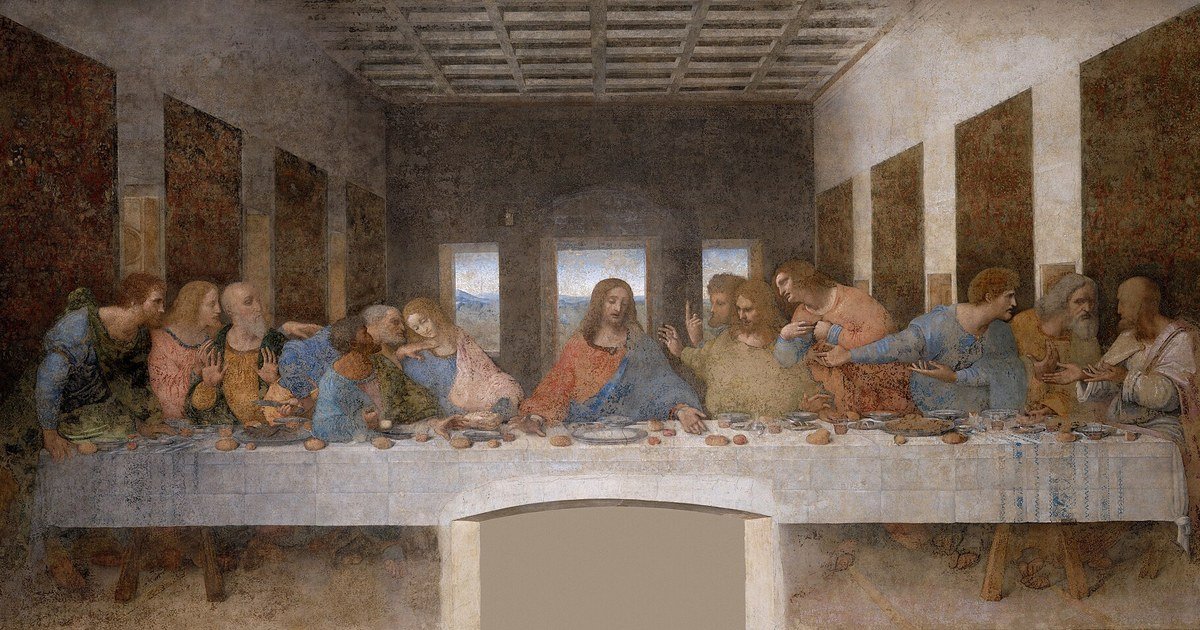
The table in the upper room. The Christian story has a parallel. At the Last Supper, Jesus sat with his twelve apostles, thirteen at the table, and Judas was the one who betrayed him. The crucifixion followed on Friday. Out of this grew the old dinner-table belief that thirteen should never sit down to eat together.
Friday on its own. Friday had an uneasy reputation long before it was paired with 13. In English folklore it was thought a bad day to begin a journey or a new project, a belief you can already find in Chaucer’s Canterbury Tales in the 14th century.
The pairing is surprisingly recent. Historians find no record of the two ideas being joined before the 19th century. One early French example is the 1834 play Les Finesses des Gribouilles, where a character complains that all his misfortunes began because he was born on “a Friday, December 13th.” In English, H. S. Edwards’ 1869 biography of the composer Gioachino Rossini noted that Rossini, who reportedly thought Fridays unlucky and 13 an unlucky number, died on Friday, November 13, 1868.
A novel spreads the idea. In 1907, the Boston financier Thomas W. Lawson published Friday, the Thirteenth, a novel in which an unscrupulous broker uses the superstition to set off a panic on Wall Street. The book was popular and likely helped carry the phrase into everyday speech.
The Templar Legend
You will often read that it all started on Friday, October 13, 1307, when officers of King Philip IV of France arrested members of the Knights Templar across the kingdom. The arrests really happened on that date, and they were brutal: many of the knights were tortured into confessions, and the order was dissolved a few years later. But no early source connects the arrests to an unlucky Friday the 13th. That link is a modern popularization, spread in recent decades through popular books and fiction, most famously Dan Brown’s The Da Vinci Code (2003). It is a powerful story, but it is not the source.
Faith and the Calendar
Christian practice. For Christians, Friday matters because it is the day of the crucifixion. Every year, Good Friday, the Friday before Easter, remembers Christ’s death with fasting, prayer and solemn liturgy. For centuries, many Christians also kept every Friday as a day of penance, and the Catholic Church still calls the faithful to abstain from meat or make some other penance on Fridays. In that sense, Friday was never meant as a day of bad luck. It is a day of remembrance, sacrifice and, in the larger story, the doorway to Easter.
Jewish tradition. Thirteen has a very different meaning in Judaism, where it is a number of blessing. Jewish tradition reads Exodus 34:6–7 as naming the Thirteen Attributes of Mercy, recited in prayer, especially on the High Holy Days. A boy becomes bar mitzvah at 13, taking on the commandments as an adult; the Mishnah (Pirkei Avot 5:21) says “at thirteen, the commandments.” Maimonides also set out Thirteen Principles of Faith. For a great many people, 13 is a beginning, not a curse.
Other cultures, other days. The unlucky date changes as you cross borders. In Spanish-speaking countries and in Greece, the dreaded day is Tuesday the 13th (martes trece). Tuesday is linked with Ares, or Mars, the god of war, and Constantinople fell on a Tuesday in both 1204 and 1453. In Italy, the unlucky day is Friday the 17th. Written in Roman numerals, XVII can be rearranged into the Latin VIXI, “I have lived,” which is a way of saying “I am dead.” Meanwhile 13 is often considered lucky in Italy. Same calendar, different fears.
Giving the Fear a Name
Psychology has given this unease two impressive names. Triskaidekaphobia is fear of the number 13. Paraskevidekatriaphobia, from the Greek words for Friday (Paraskevi), three (treis), ten (deka) and fear (phobos), is fear of Friday the 13th itself. Studies of accidents and emergency-room visits have not found that the day is actually more dangerous. Dutch insurance figures from 2008 even suggested slightly fewer accidents on Friday the 13th, perhaps because people are more careful.
A Stoic Lens
Nearly two thousand years ago, the Stoic teacher Epictetus, born into slavery and later a free philosopher, put the whole question in one line. In Thomas Wentworth Higginson’s translation of the Enchiridion, Chapter V:
“Men are disturbed not by things, but by the views which they take of things.”
A calendar square cannot harm anyone. What unsettles us is the story we lay over it. Epictetus even speaks directly to omens. In Chapter XVIII he writes:
“When a raven happens to croak unluckily, be not overcome by appearances, but discriminate and say, ‘Nothing is portended to me, either to my paltry body, or property, or reputation, or children, or wife. But to me all portents are lucky if I will. For whatsoever happens, it belongs to me to derive advantage therefrom.'”
This is not a call to sneer at anyone’s beliefs. It is an invitation to notice the space between an event and our response to it, and to choose what we do in that space.
Closing: The Day You Decide to See
Tattoo culture took this lesson to heart long ago. Every Friday the 13th, shops around the world stay open late and offer 13-themed flash, turning the “unlucky” day into a celebration. Wearing a 13 becomes a small act of defiance, a way of saying the meaning is ours to make.
Much of this tradition traces back to Texas. In 1995, the Dallas tattoo artist Oliver Peck, who later co-founded Elm Street Tattoo in the city’s Deep Ellum district and became known as a judge on Ink Master, threw a 24-hour Friday the 13th tattoo party at a Dallas shop called Pair O’ Dice. He said he was inspired by the Halloween specials of tattooer Dave Lum. Peck has been modest about it: “I definitely wasn’t the first person to do it, the number 13 tattoo on the Friday the 13th,” he told Vice, “but, I definitely made it an event.” Elm Street Tattoo, which opened in 1996, has kept the 24-hour marathon going on every Friday the 13th since. Small flash pieces sell for $13, often with a $7 tip added for luck, and the line can run to around a thousand people. In 2008, Peck earned a Guinness World Record for tattooing a 13 on 415 people in 24 hours. What began as one shop’s party became a ritual shared by tattooers everywhere.
That is what Inner Vision has always been about. Art begins inside, in how we choose to see. A raven, a number or a Friday is just a shape until the mind gives it a meaning. This Friday the 13th, choose a meaning worth wearing.