
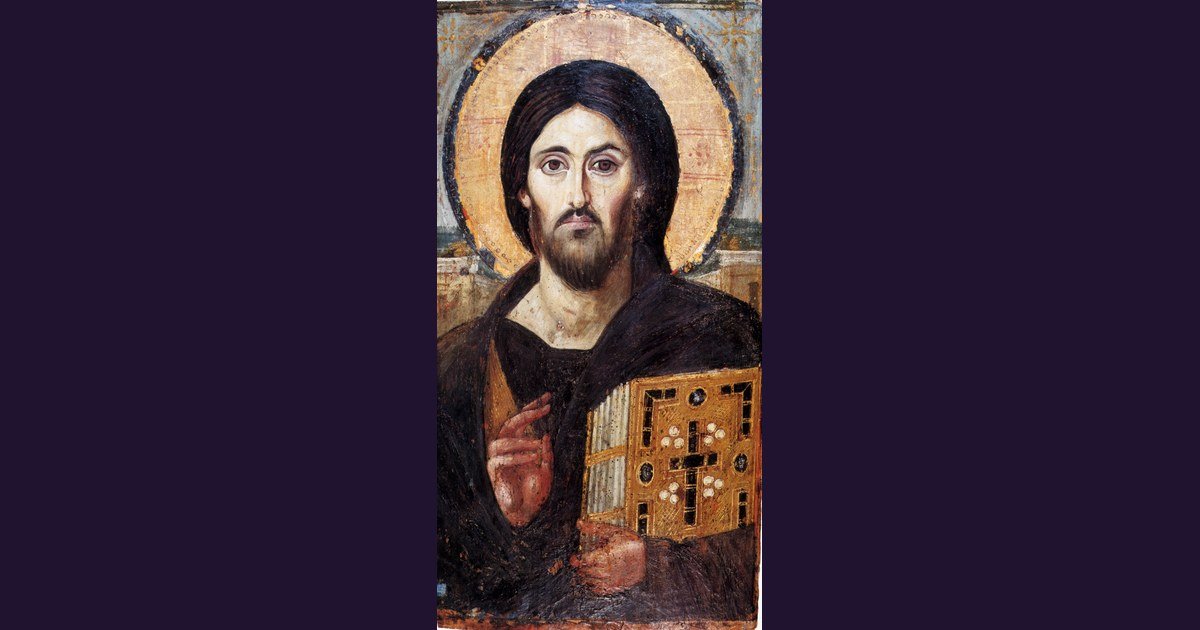
I have always been drawn to the great teachers of the ancient world. Socrates, the Buddha, Confucius, Hypatia. Jesus of Nazareth belongs on that list for me, and I want to write about him in a way that works for everyone who reads this blog.
Some of you believe he is the Son of God. Some of you don’t. This post is not trying to change anyone’s mind. I just want to look at what he taught and at what historians can actually say about the man himself.
All the verse quotes below are from the King James Version, which is in the public domain.
A Teacher Who Spoke in Plain Words
Jesus never wrote a book. He taught out loud, out in the open and around dinner tables, mostly to ordinary working people in Galilee. He used stories about farmers, fishermen, lost sheep and travelers on the road. Two thousand years later those stories are still being retold.
The Golden Rule
“Therefore all things whatsoever ye would that men should do to you, do ye even so to them: for this is the law and the prophets.”
Matthew 7:12
Versions of this idea show up in many cultures. The Jewish sage Hillel, a generation or so before Jesus, is remembered for saying “What is hateful to thee, do not unto thy fellow” (Babylonian Talmud, Shabbat 31a, trans. Michael L. Rodkinson, 1903). The Greek orator Isocrates wrote something close to it too. What stands out to me in the way Jesus put it is that it is active. It is not only about avoiding harm. It asks you to go and do the good you would hope for yourself.
Love Your Enemies
“Ye have heard that it hath been said, Thou shalt love thy neighbour, and hate thine enemy. But I say unto you, Love your enemies, bless them that curse you, do good to them that hate you, and pray for them which despitefully use you, and persecute you.”
Matthew 5:43-44
This one is hard. I think it might be the hardest thing he ever said. Loving the people who are good to us comes naturally. Loving the ones who hurt us does not, and he knew that. He asked for it anyway.
The Sermon on the Mount and the Beatitudes
Matthew chapters 5 to 7 hold what is called the Sermon on the Mount. It opens with the Beatitudes, a set of blessings that turn ordinary ideas of success upside down.
“Blessed are the poor in spirit: for theirs is the kingdom of heaven. Blessed are they that mourn: for they shall be comforted. Blessed are the meek: for they shall inherit the earth. Blessed are they which do hunger and thirst after righteousness: for they shall be filled. Blessed are the merciful: for they shall obtain mercy. Blessed are the pure in heart: for they shall see God. Blessed are the peacemakers: for they shall be called the children of God.”
Matthew 5:3-9
The world usually praises the strong and the loud. Here the honor goes to the gentle and the ones who make peace.
Do Not Worry About Tomorrow
“Take therefore no thought for the morrow: for the morrow shall take thought for the things of itself. Sufficient unto the day is the evil thereof.”
Matthew 6:34
This is one of my favorites. The Stoic philosophers were working on the same problem in roughly the same century. Seneca wrote in one of his letters that a person “suffers more than is necessary, who suffers before it is necessary” (Moral Letters to Lucilius, 98.8). Epictetus, a little later, taught that “Men are disturbed, not by things, but by the principles and notions which they form concerning things” (Enchiridion, 5).
I don’t want to make too much of this. The reasons were different. The Stoics pointed to reason and to accepting what we cannot control. Jesus pointed to trust in a Father who cares for the birds and the lilies of the field (Matthew 6:26-30). But they arrived at a similar place, and I find that beautiful.
The Mote and the Beam
“Thou hypocrite, first cast out the beam out of thine own eye; and then shalt thou see clearly to cast out the mote out of thy brother’s eye.”
Matthew 7:5 (the full saying runs from 7:3 to 7:5)
A mote is a speck of dust. A beam is a wooden plank. The picture is almost funny, a man with a board sticking out of his eye trying to help someone else with a speck. It is a gentle way of saying look at yourself first before you judge anyone else.
The Good Samaritan
A lawyer asked Jesus, “And who is my neighbour?” (Luke 10:29). Jesus answered with a story. A man is robbed and left half dead on the road from Jerusalem to Jericho. A priest walks past. A Levite walks past. Then a Samaritan, someone the listeners would have seen as an outsider, stops, binds his wounds, takes him to an inn and pays for his care.
Jesus asks which of them was the neighbor. The lawyer says, “He that shewed mercy on him.” And Jesus tells him, “Go, and do thou likewise” (Luke 10:37).
I love that the hero of the story is the person nobody expected. Being a neighbor is not about where you come from. It is about what you do when someone is hurting in front of you.
Let Him Without Sin Cast the First Stone
A woman is brought before Jesus, accused of adultery, and the crowd wants to stone her. He bends down and writes in the dust. When they keep pressing him, he stands up and says:
“He that is without sin among you, let him first cast a stone at her.”
John 8:7
One by one they walk away. An honest note: this story is not found in the oldest surviving manuscripts of John, and many scholars think it was added later. Even so, it has been loved for centuries, and it fits so well with everything else he taught about mercy.
The Greatest Commandments
When someone asked him which commandment was the most important, he gave two, both drawn from the Hebrew scriptures (Deuteronomy 6:5 and Leviticus 19:18):
“And thou shalt love the Lord thy God with all thy heart, and with all thy soul, and with all thy mind, and with all thy strength: this is the first commandment. And the second is like, namely this, Thou shalt love thy neighbour as thyself. There is none other commandment greater than these.”
Mark 12:30-31
Whether or not you believe in God, the second half speaks to anyone. Love the people around you the way you would want to be loved.
Render unto Caesar
His opponents tried to trap him with a question about paying taxes to Rome. If he said yes, he would anger his own people. If he said no, he could be reported to the Romans. He asked for a coin, pointed to Caesar’s image on it, and said:
“Render to Caesar the things that are Caesar’s, and to God the things that are God’s. And they marvelled at him.”
Mark 12:17
It is a clever answer, and people have been debating what exactly it means ever since. That is part of what makes him a real philosopher to me. He made people think.
Did Jesus Really Live? What Historians Say
This is a separate question from faith, and I think it helps to keep the two apart. Historians cannot prove or disprove miracles or the resurrection. Those are matters of faith. What historians can look at is whether a Jewish teacher named Jesus lived in Galilee in the early first century and was crucified. On that, the evidence is better than most people expect.
Tacitus, a Roman Historian
Tacitus was a Roman senator and historian, and no friend of Christianity. Writing around 115 AD about the great fire of Rome under Nero, he explained where the name “Christians” came from:
“Christus, from whom the name had its origin, suffered the extreme penalty during the reign of Tiberius at the hands of one of our procurators, Pontius Pilatus.”
Tacitus, Annals 15.44 (translation by Alfred John Church and William Jackson Brodribb)
Josephus, a Jewish Historian
Flavius Josephus wrote his Antiquities of the Jews around 93 to 94 AD. He mentions Jesus twice.
The longer passage, known as the Testimonium Flavianum (Antiquities 18.63-64), describes Jesus as a wise man and teacher who was condemned to the cross by Pilate. In the form we have it today, it also says things like “He was the Christ,” which most scholars think a Jewish writer like Josephus would not have said. The common view is that Josephus did write about Jesus here, and that later Christian copyists added to it. Scholars still debate how much is original.
The shorter passage (Antiquities 20.200) is much less disputed. It tells of the execution of James, describing him as:
“the brother of Jesus, who was called Christ, whose name was James”
Josephus, Antiquities 20.200 (translation by William Whiston)
Pliny the Younger
Around 112 AD, Pliny the Younger, a Roman governor in what is now northern Turkey, wrote to Emperor Trajan asking how to deal with Christians. He reported that they met before dawn on a fixed day and sang “a hymn to Christ as to a god” (Letters 10.96). This one tells us about early Christians more than about Jesus himself, but it shows how quickly the movement had spread.
The Letters of Paul
The earliest writings about Jesus that we have are the letters of Paul, written roughly in the 50s AD, about twenty to thirty years after the crucifixion. Paul says he met Jesus’s brother in Jerusalem: “But other of the apostles saw I none, save James the Lord’s brother” (Galatians 1:19). That lines up with what Josephus wrote about James.
Where Historians Land
The large majority of historians who study this period, religious or not, agree that Jesus of Nazareth existed. They also agree on a few basic facts: he was a Jewish teacher from Galilee, he was baptized by John the Baptist, and he was crucified in Judea under Pontius Pilate, who governed there from about 26 to 36 AD. This includes scholars like Bart Ehrman, who is agnostic and has written a whole book on the question, Did Jesus Exist? (2012).
For someone from a small village who never held power and never wrote anything down, that is a lot of evidence for the ancient world.
A Philosopher for Everyone
You do not have to believe Jesus was divine to be moved by what he said. You also do not have to give up your faith to look at him as a historical person. Both can sit side by side.
For me, he was one of the most remarkable teachers this world has ever had. He talked about mercy and caring for strangers, and he spent his time with poor and ordinary people. Whether you pray to him or simply admire him, his words are still worth sitting with.
With respect to all of you, whatever you believe.
Christoph Fluke
Sources
- King James Version (public domain): Matthew 5:3-9, 5:43-44, 6:26-30, 6:34, 7:3-5, 7:12; Mark 12:17, 12:30-31; Luke 10:29-37; John 8:7; Galatians 1:19. Bible Gateway: https://www.biblegateway.com/versions/King-James-Version-KJV-Bible/
- Tacitus, Annals 15.44, Church and Brodribb translation (MIT Classics): https://classics.mit.edu/Tacitus/annals.11.xv.html
- Josephus, Antiquities of the Jews 18.63-64 and 20.200, Whiston translation: https://www.gutenberg.org/ebooks/2848
- Wikipedia, “Josephus on Jesus”: https://en.wikipedia.org/wiki/Josephus_on_Jesus
- Pliny the Younger, Letters 10.96: https://faculty.georgetown.edu/jod/texts/pliny.html
- Seneca, Moral Letters to Lucilius, Letter 98: https://en.wikisource.org/wiki/Moral_letters_to_Lucilius/Letter_98
- Epictetus, Enchiridion 5: https://classics.mit.edu/Epictetus/epicench.html
- Babylonian Talmud, Shabbat 31a, trans. Michael L. Rodkinson (1903, public domain): https://sacred-texts.com/jud/t01/t0110.htm
- Wikipedia, “Historicity of Jesus”: https://en.wikipedia.org/wiki/Historicity_of_Jesus
- Bart D. Ehrman, Did Jesus Exist? The Historical Argument for Jesus of Nazareth (HarperOne, 2012)
- Image: https://commons.wikimedia.org/wiki/File:Spas_vsederzhitel_sinay.jpg